

Thể loại
Blog mới
The Evolution of Polyvinyl Butyral (PVB) Resin: From Innovation to Industry Essential
Nov 06, 2026Polyvinyl butyral (PVB) resin has come a long way since its early 20th-century beginnings. What started as a niche polymer has grown into an indispensable material across a wide range of manufacturing sectors—from automotive safety glass and printing inks to coatings, adhesives, and construction materials. Its staying power speaks to both the adaptability of its chemistry and the ever-expanding list of polyvinyl butyral resin uses.
Today, PVB resin is available in a variety of grades, each customized for specific viscosity, molecular weight, solubility, and thermal performance requirements. This flexibility makes it well-suited to evolving industrial demands. Understanding how PVB has developed over the decades offers valuable insight into its technological advancement and continued relevance in modern manufacturing.
What Are the Current Industrial Trends Shaping Polyvinyl Butyral Use?
Several key trends are currently shaping how industries use polyvinyl butyral resin:
Hybrid Systems: PVB is increasingly combined with other resins, such as nitrocellulose or acrylics, to improve flexibility or control drying time in printing inks.
High-Performance Binders: In specialty paints and lacquers, PVB resins enhance mechanical strength and environmental resistance while improving flow and leveling.
Printable Electronics: As flexible circuits and sensors become more common, PVB is being explored as a dielectric layer or print medium thanks to its excellent film-forming and electrical properties.
Advanced Laminates: Security glass and multilayered optical laminates benefit from PVB's combination of adhesion, clarity, and impact resistance.
These applications continue to push the limits of PVB performance, prompting manufacturers to innovate with new grades and production processes.
How Has Polyvinyl Butyral Evolved in Printing Inks and Coatings?
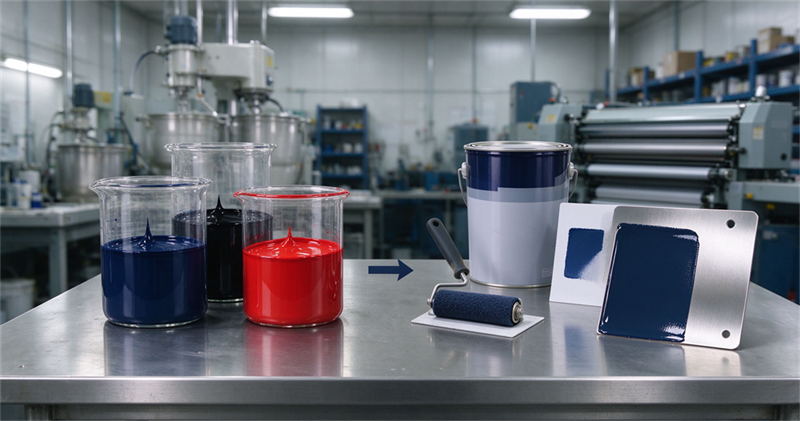
With its strong adhesion, transparency, and toughness, polyvinyl butyral resin became an important ingredient in printing inks and surface coatings. Over time, industrial chemists refined the resin to improve compatibility with pigments, solvents, and additives—enabling smooth film formation and consistent gloss retention.
In flexographic and gravure printing, PVB allows for superior ink transfer, vivid color retention, and print durability. Its controlled solubility in alcohols and ketones makes it suitable for solvent-based formulations, often without the need for additional binders or adhesion promoters.
In coatings, PVB is used in protective varnishes and primers, where it provides elasticity and resistance to cracking or peeling. Its thermoplastic nature also allows for reflow and reforming under heat, supporting layered coating systems in automotive and industrial metal finishes.
As a result, PVB resin has become a staple in ink and coating formulations where clarity, adhesion, and mechanical resilience are non-negotiable.


 Mạng IPv6 được hỗ trợ


